30.07.2026
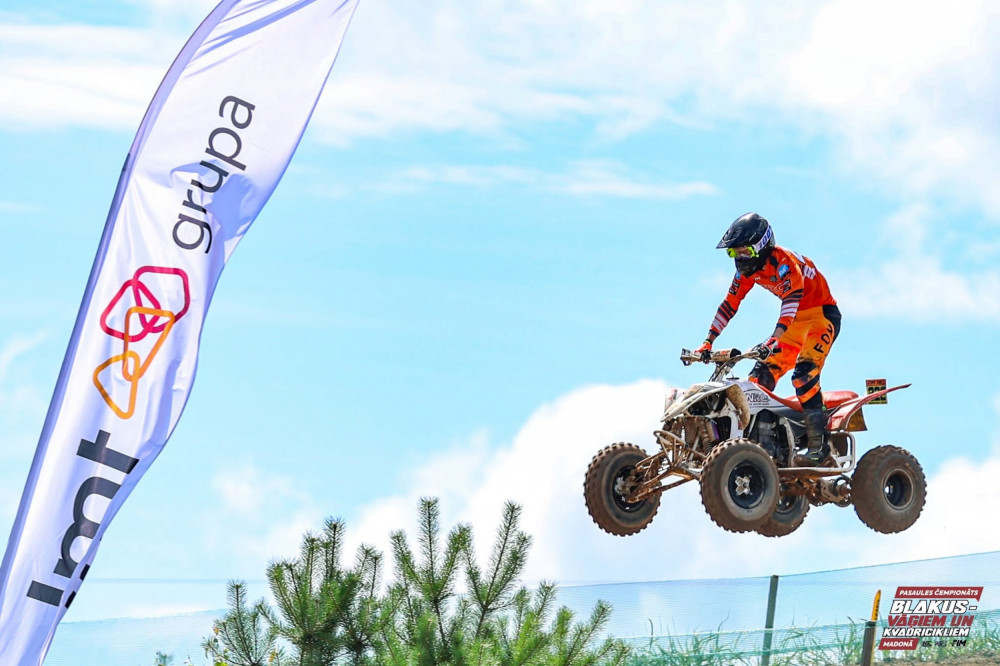
Around 7,000 people attend World Motocross Championship round in Madona; nearly one in five came from abroad
For the first time, visitor numbers and movements at this year’s Sidecar Motocross World Championship round and Quadcross World Championship event in Madona were analysed using LMT Group’s “Plūsma” mobility data analytics solution. The anonymised data collected by the platform, combined with information available to the organisers, provided the most comprehensive picture to date of attendance, visitor flows and time spent at the event, offering valuable insights for improving the visitor experience at future events.
Data from LMT’s “Plūsma” indicate that the competition in Madona attracted approximately 7,000 people in total. On the main race day, Sunday, 26 July, 6,570 people visited the “Smeceres sils” motocross track, while 2,530 visitors were recorded on Saturday, 25 July. The figures for the two days cannot be added together, as some spectators attended the event on both days. The total attendance figure has therefore been determined on the basis of mobility data and the organisers’ estimates.
On Sunday, visitors spent an average of six hours and five minutes at the competition venue, while international guests accounted for 18.3% of all visitors. On Saturday, the average time spent at the venue was five hours and 18 minutes, while international visitors represented 20.2% of the audience.
Visitors came not only from neighbouring countries, but also from France, the United Kingdom, the Netherlands, Norway, Belgium, Czechia, Denmark, Finland and elsewhere. Estonia accounted for the largest share of international visitors on both days of the competition.
“More than 6,500 visitors on the main race day is a significant result not only for Madona, but for any major sporting event held in the regions. LMT’s mobile base station helped ensure stable mobile connectivity at a time when several thousand spectators, athletes and team representatives were present at the track simultaneously. The fact that nearly one in five visitors came from abroad demonstrates that organising large-scale sporting events is an important driver of both economic activity and international visibility for Madona Municipality. The International Motorcycling Federation, FIM, as well as the athletes and team representatives, also recognised that the Madona round was organised to a very high standard. At the same time, it is important to assess after every event where further improvements can be made, and this year one of the most significant benefits was undoubtedly our cooperation with LMT,” says Agris Lungevičs, Chairman of Madona Municipality Council.
“Ticketing data show how many admission tickets have been sold or used, whereas mobility analytics provide a much broader picture — when visitors arrive, how long they stay at the venue, when the greatest pressure on infrastructure occurs and which countries they have travelled from. This information can help organisers and municipalities make even more precise, data-driven decisions in the future,” says Aigars Runčis, Director of LMT’s Business Growth Division.
Through cooperation with LMT’s regional business customer centre in Rēzekne, mobile and internet coverage at the event venue was also improved. To ensure stable connectivity during periods of high attendance, LMT deployed a mobile base station at the competition site.
“The involvement of regional business centres in delivering projects of this scale demonstrates how important our presence in the regions is, enabling us to respond quickly with the necessary solutions. LMT Business Customer Centres throughout Latvia, including the centre in Rēzekne, serve as support points for local businesses and event organisers, covering everything from everyday connectivity matters to the implementation of more advanced IT, cybersecurity and other digital solutions,” says Renārs Omutovs, Head of LMT’s Small and Medium-sized Enterprise Customer Service Division.
LMT’s “Plūsma” service provides reliable data that can be used to improve the planning of traffic, public services, infrastructure development, tourism, events and business activity. The service is therefore valuable to public authorities, municipalities, businesses and society as a whole, as it supports the development, provision and use of more effective services.
The data are fully anonymised and processed in accordance with the highest international security standards. In addition to LMT’s internal security measures and audits, the anonymisation methods and processes used in LMT’s mobility data analytics service have received the internationally recognised ISO/IEC 27559:2022 certification, making LMT the only holder of this certification in Latvia.